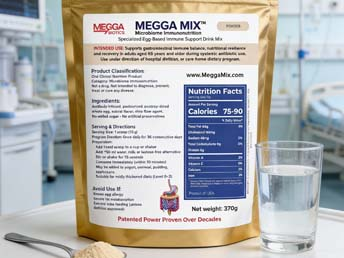
MEGGA MIX Cost-Benefit Analysis
Evaluating the financial impact for Clostridioides difficile infection in Florida hospitals
Susceptible Patients in Florida
The following analysis evaluates the financial impact of implementing a preventive treatment program across different infection rates.
Prevention Cost = $500 (Program Cost = $340,000,000)
| Infection Rate | Expected CDI Cases | Avoided Cases (90%) | Avoided Treatment Cost | Program Cost | Net Savings | ROI |
|---|---|---|---|---|---|---|
| 1.0% | 6,800 | 6,120.0 | $183,600,000 | $340,000,000 | −$156,400,000 | 0.54 |
| 2.0% | 13,600 | 12,240.0 | $367,200,000 | $340,000,000 | $27,200,000 | 1.08 |
| 3.0% | 20,400 | 18,360.0 | $550,800,000 | $340,000,000 | $210,800,000 | 1.62 |
| 4.0% | 27,200 | 24,480.0 | $734,400,000 | $340,000,000 | $394,400,000 | 2.16 |
| 5.0% | 34,000 | 30,600.0 | $918,000,000 | $340,000,000 | $578,000,000 | 2.70 |
Estimated Baseline CDI Rate in the Specified Florida Cohort
Based on a review of recent CDC data (2022–2023), peer-reviewed studies, and NHSN surveillance reports, the baseline hospital-onset CDI (HO-CDI) incidence in high-risk populations like elderly (≥65 years) hospitalized patients on antibiotics is estimated at 2.5–3.5% in US hospitals, with no significant deviations for Florida specifically.
Key Takeaways
With 90% effectiveness, the preventive becomes cost-saving at ≥ ~1.85% infection rate.
Infection rates of 3%–5% produce substantial net savings (hundreds of millions of dollars).
At a 3% infection rate, the program yields $210.8M in net savings.
This analysis demonstrates that implementing a preventive treatment program for CDI in Florida hospitals can yield significant financial benefits, particularly at infection rates of 2% or higher.

Proactive Protection for Florida's Most Vulnerable

Bringing Families Home Sooner. Keeping Them Home Safer.